



One Health Summit Declaration: Saint-Hyacinthe and Its Future Centre Ready to Position Quebec at the Forefront of Global Health Issues
14 April 2026
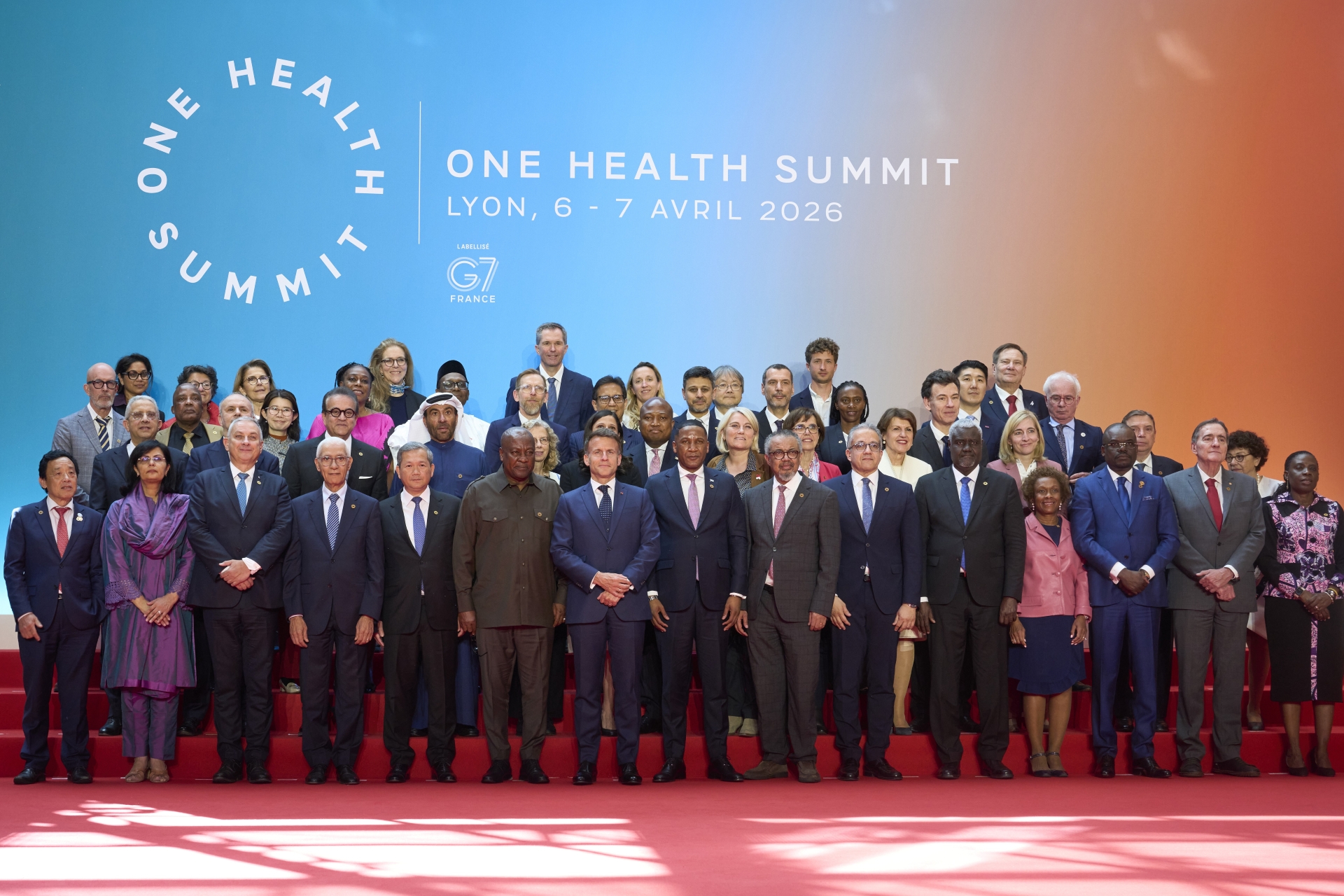
Saint-Hyacinthe Technopole welcomes the growing place the One Health concept is taking in the international political sphere following the adoption of a political declaration stemming from the One Health Summit, held last week in Lyon under the auspices of the President of the French Republic, Emmanuel Macron.
The summit brought together government representatives, international organizations, and scientific experts from numerous countries, including Canada, to strengthen global cooperation in the face of growing health risks affecting human, animal, and food health alike.
The declaration adopted at the summit explicitly recognizes the importance of preventing transmissible diseases between animals and humans, combating antimicrobial resistance, and strengthening food safety. It also calls on governments to invest more in research, innovation, and infrastructure capable of anticipating health crises and supporting the resilience of food systems.
These directions come against a backdrop where experts are multiplying warnings about the increase in transmissible diseases between animals and humans, the spread of antibiotic-resistant bacteria, and the growing risks linked to disruptions of food systems. The potential consequences of these phenomena directly affect human health, the availability of medical treatments, and the stability of food supplies.
An international vision aligning with Saint-Hyacinthe’s proposed directions
The broad lines of this declaration directly align with the technological axes proposed by Saint-Hyacinthe Technopole and its partners as part of their innovation zone project, already based on the One Health approach, but which had not received approval from the Government of Quebec. Today, this approach constitutes the central theme of the Agri-Food Innovation and Entrepreneurship Centre project that the organization wishes to realize in the heart of the Cité de l’innovation agroalimentaire. Despite the growing international recognition of these issues, this structuring project remains in the process of securing funding confirmation from the Government of Quebec.
For Karine Guilbault, Executive Director of Saint-Hyacinthe Technopole, the international recognition of the One Health approach confirms the relevance of the region’s strategic positioning.
“Saint-Hyacinthe today has all the conditions to exercise concrete leadership on issues related to the One Health concept, particularly regarding zoonotic diseases, antimicrobial resistance, and the safety of food systems. These are major issues for which experts are sending increasingly urgent warning signals, because inaction could result in a rise in transmissible diseases, a loss of effectiveness of medical treatments, and disruptions to food supplies.”
And for good reason, Saint-Hyacinthe constitutes one of the rare hubs in North America whose institutions and expertise cover all the issues related to the One Health concept, notably thanks to the Faculté de médecine vétérinaire de l’Université de Montréal, as well as a recognized network of research centres, businesses, and organizations specialized in animal health, food safety, and biotechnology. The region was represented at the Lyon summit by researchers from the Research Group on Epidemiology of Zoonoses and Public Health, affiliated with the Faculty of Veterinary Medicine, who were members of the Canadian delegation.
“We are working very actively to offer, thanks to the expertise and infrastructure of our innovation hub, concrete solutions to public decision-makers to address these major public health and food safety issues. We hope that the declaration adopted in Lyon will help raise awareness among our decision-makers about the strategic importance of investing in infrastructure capable of preventing tomorrow’s health crises,” concluded Karine Guilbault.
Photo credit: World Health Organization (WHO)